
Structured vs. Unstructured Data
A Difference in Management
Everyone realizes there’s an informational treasure buried deep within their organizational content. But trying to get to that treasure with the tools most companies have today? It often feels like digging for gold with a plastic spork instead of a high-tech mining drill. Sure, content management platforms have already brought crucial order to the content chaos—kind of like tidying up a messy room by buying a drawer. They’ve dramatically improved search capabilities and added structure; but let’s be honest, we’ve all been waiting for the day when the organizing and sorting becomes automated. Oh, and when search becomes better; that’s a fact.
On the flip side, when it comes to “structured data” – the kind that lives in spreadsheets and databases – organizations tend to feel a lot more in control. They feel they’ve got the right tools and techniques to handle this kind of data like pros. Technologies like data lakes, reporting engines, and ETL tools have become the norm in recent years, making them feel like they've mastered the art of data management. So, over the past decade, many companies have gone all in, putting serious effort into building up data science dream teams. The result is that most structured data has become neatly organized, consolidated, and is working hard like it’s supposed to.
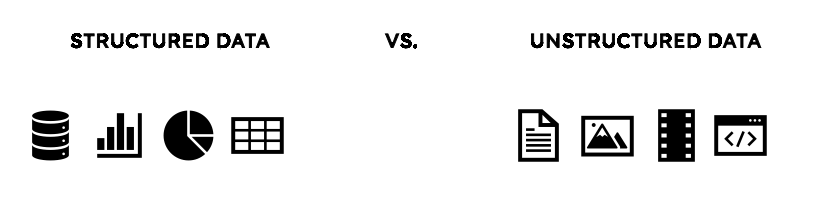 When you think it through, the difference in management and automation levels between structured and unstructured data is not that surprising. Structured data? Easy for computers to process, but for humans? Unstructured data, on the other hand, is the opposite—simple for humans to understand but a total enigma to machines. Naturally, automation for structured data came first because, well, computers like things neat and tidy.
Generative AI – The Game Changer for Content
Generative AI as Content’s Mining Drill
But today’s tech world is moving faster than ever before. The latest game-changer? Generative AI, and more specifically, Large Language Models (LLMs). These recent innovations are rapidly developing into the “grinding mills” we’ve been waiting for to sift through mountains of content and extract pure gold.
LLMs are turning the unstructured data world upside down, giving us new superpowers we couldn’t have dreamed of just a couple of years ago. As the name suggests, these models are all about language, and they’ve mastered the art of automatically processing content. We’re not just talking about generating and rewriting content anymore. Nope. They’re taking it up a notch with automatic summarization, classification, and interactive information discovery. It’s like having a supercharged assistant that actually likes sorting through your messy files.
Take Microsoft Copilot, for example. Fully integrated into Microsoft 365, it doesn’t just help you write emails or whip up PowerPoint presentations. It can also summarize hefty documents, create minutes from online meetings, and even pull together info from emails, chats, and the web to answer your trickiest questions. Or take the perspective of web content, where innovations like Retrieval-Augmented Generation (RAG) are leveling up customer experiences. Forget those days of endlessly scrolling through Google search results trying to find the user manual for your new TV. With RAG, you get a straight-up, clearly formulated answer to your burning question: “How do I connect these dang speakers?”
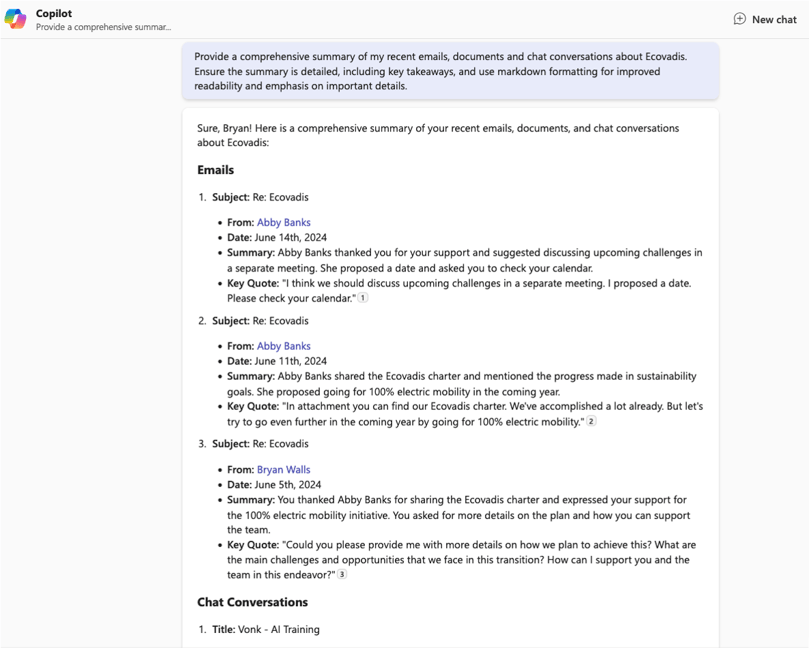
These advances aren’t just little tweaks—they’re full-blown revolutions in how we’ll manage and use content from now on. We’re not talking about minor upgrades; we’re talking about Gen AI kicking down the door and bringing automation and intelligence for content processing to a whole new level. Even more, this fusion of old-school content management with the AI revolution is about to create a whole new discipline, that of Content Science.
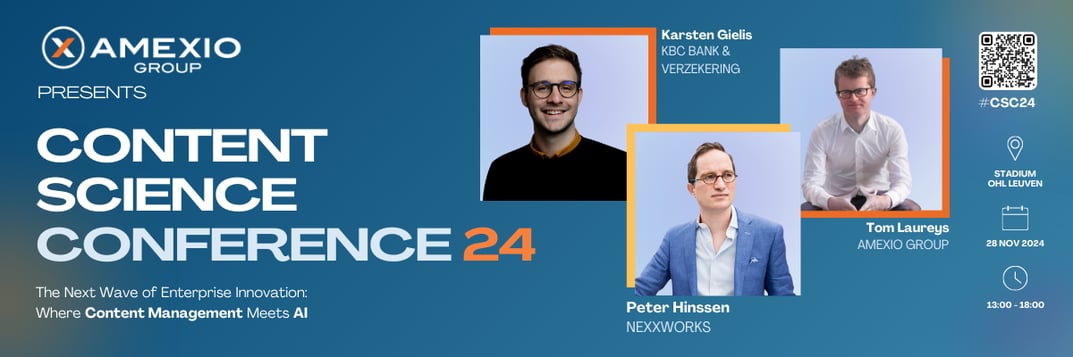
Curious about how content science could supercharge your organization? Want to hear directly from Peter Hinssen about his take on this revolution? Or maybe you’re interested in how KBC is weaving AI into its content strategies?
Register for Amexio’s Content Science Conference in Leuven on 28th November. It’s free!

Tom Laureys
Solution Director AmeXio